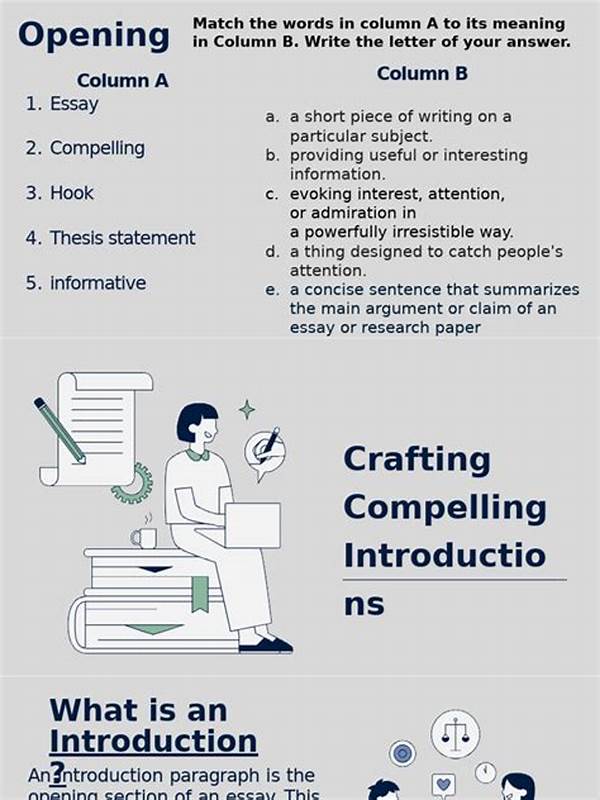
Crafting compelling introduction paragraphs is a vital skill for any writer. Whether you’re penning a novel, writing a blog post, or drafting an academic paper, the introduction sets the stage for everything that follows. A captivating opening can draw readers in, spark curiosity, and make them eager to know more. Let’s explore the nuances of crafting compelling introduction paragraphs and how you can master this art.
The Art of Crafting Compelling Introduction Paragraphs
Writing an introduction paragraph is like painting a picture. You want to provide just enough detail to spark interest, without giving everything away. When crafting compelling introduction paragraphs, aim to grab attention with a hook, whether it’s a quote, a question, or a startling fact. The next key is clarity—ensure your introduction clearly indicates the topic or direction of your text. Moreover, the introduction should exude confidence, showing that you know where you’re headed and why readers should follow your lead. By weaving these elements into your introduction, you can create a paragraph that piques curiosity and encourages further reading, setting the tone for the rest of your writing.
Essential Elements of a Compelling Introduction
1. Hook: Start with an engaging opening sentence that intrigues the reader.
2. Context: Provide necessary background information to set the scene.
3. Clarity: Clearly convey the topic or theme of your writing.
4. Purpose: Highlight the significance of your subject matter.
5. Preview: Give a glimpse of what’s to come, enticing readers to continue.
Crafting compelling introduction paragraphs requires weaving these elements into a cohesive whole that resonates with readers.
Developing a Natural Sounding Style
A natural sounding writing style is conversational yet concise. When crafting compelling introduction paragraphs, aim for language that’s approachable and relatable. This style doesn’t feel stilted or overly formal. Instead, it flows smoothly, using everyday language that readers find engaging and easy to understand. Strive for simplicity while ensuring that you convey depth and insight. One way to achieve this natural tone is by imagining you’re speaking directly to your reader, crafting sentences that reflect how you would converse in real life. This approach not only makes your introductions more inviting but also helps maintain reader interest from start to finish.
Characteristics of Natural Sounding Language
1. Conversational Tone: Write as though you’re speaking to a friend, creating a sense of intimacy.
2. Simplicity: Use simple language to convey complex ideas effectively.
3. Relatability: Relate ideas to everyday experiences for better understanding.
4. Clarity: Avoid jargon and use clear, straightforward language.
5. Fluidity: Ensure sentences flow naturally from one to the next.
6. Engagement: Ask questions or use anecdotes to pique interest.
7. Authenticity: Write in a way that’s true to your voice and style.
8. Imagery: Paint a picture with words to deepen understanding.
9. Humor: Where appropriate, inject humor to make content more enjoyable.
10. Empathy: Consider your reader’s perspective, addressing their needs and interests.
Crafting compelling introduction paragraphs with a natural sounding language involves applying these principles to create engaging and captivating openings.
Mastering the Art of Introduction Writing
Achieving mastery in crafting compelling introduction paragraphs is about finding the balance between engagement and information. Each introduction should serve both as a gateway and a guide. The use of vivid imagery, compelling anecdotes, or thought-provoking questions helps to draw readers in. For instance, when writing an introduction about climate change, you can begin with a striking image of vast polar ice melting or use a powerful quote from a leading scientist. This not only grabs attention but also sets the thematic tone.
Furthermore, another essential aspect is relatability. Readers are more inclined to continue reading if they can relate to the content. When crafting the introduction, consider what might resonate with your audience’s experiences or emotions. This can be achieved through personal anecdotes or common cultural references that bridge the gap between writer and reader. Ultimately, a well-crafted introduction not only captivates but also provides a solid foundation for the rest of the piece, effectively setting the stage for the arguments or narratives that follow.
Summary of the Natural Sounding Style
The natural sounding writing style is all about creating a connection. It’s akin to having a pleasant conversation, where ideas flow effortlessly and are easily comprehended. In crafting compelling introduction paragraphs, the focus is on cultivating a tone that’s warm and inviting while still delivering essential information. This involves a balance of simplicity and sophistication, ensuring that your writing is both understandable and insightful.
Moreover, using a natural sounding style includes the careful selection of words and phrases that resonate with readers. It’s about striking the right chord with your audience, addressing them directly and personally. This style doesn’t rely on fancy words or complex jargon; rather, it thrives on clarity and authenticity. Crafting compelling introduction paragraphs in this manner ensures that readers are not just passive recipients of information, but engaged participants who feel seen and heard. Whether you’re writing for academia, business, or pleasure, adopting a natural sounding style can significantly enhance the impact and reach of your introductions.