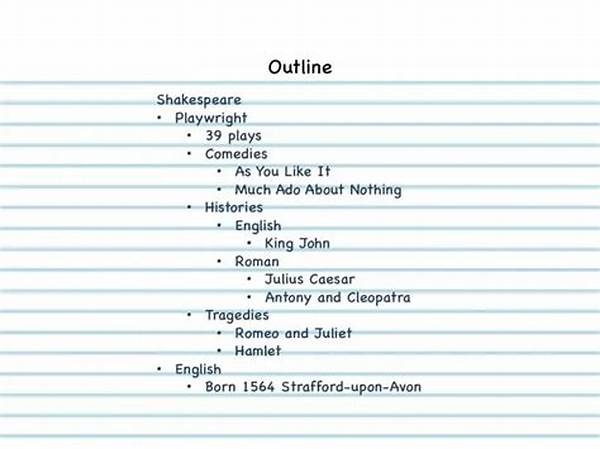
Writing a book can feel like climbing a mountain. With so many thoughts swirling in an author’s mind, organizing them into a cohesive and compelling narrative is no small feat. However, by implementing effective outlining strategies, authors can map out their ideas clearly, setting a strong foundation for their work. Outlining not only helps in structuring the content but also provides a roadmap that guides the writing process. Let’s explore how authors can successfully approach outlining.
The Importance of Outlining Strategies for Authors
Outlining strategies for authors play a crucial role in transforming a faint idea into a full-fledged book. By creating an outline, writers can visualize the entire narrative arc, ensuring that every element supports the central theme. An outline acts like a blueprint, allowing authors to structure their chapters logically, ensuring a natural flow from one idea to the next. This practice is especially beneficial in maintaining consistency throughout the manuscript. Moreover, having a detailed outline helps authors avoid plot holes and develop more complex characters.
In addition to organizing content, outlining strategies for authors significantly reduce the daunting feeling of staring at a blank page. By breaking down the manuscript into smaller, more manageable sections, authors can tackle their work one piece at a time, which can significantly boost productivity and reduce feelings of overwhelm. Writers can also use outlines to set realistic writing goals, tracking their progress as they develop each section. Thus, an effective outline serves as both a roadmap and a motivator, providing clear direction and encouraging sustained effort.
Finally, outlining strategies for authors are not only about planning content but also about flexibility. As writers delve deeper into their stories, new ideas can emerge that take the manuscript in unexpected directions. A well-crafted outline can accommodate such changes without sacrificing the overall structure of the narrative. This flexibility helps authors remain open to creativity and innovation, allowing them to refine their stories while remaining committed to their original vision.
Techniques for Effective Outlining Strategies
1. Mind Mapping: This outlining strategy for authors involves creating a visual representation of ideas. Authors jot down their central theme and branch out with related sub-themes, making it easier to see connections.
2. Chapter Summaries: Authors write brief descriptions for each chapter. This outlining strategy provides a snapshot of the narrative flow, ensuring coherence and continuity.
3. Index Cards: By jotting down major plot points or character arcs on individual cards, authors can rearrange them to see different narrative structures, aiding in a flexible outlining process.
4. Storyboard Method: Similar to how films are mapped, authors can sketch scenes, helping visualize key moments and transitions in their book, making outlining strategies tangible and dynamic.
5. Chronological Outlining: This approach structures events in a linear timeline. It’s a practical outlining strategy for authors dealing with complex plots or historical narratives, ensuring chronological accuracy.
Building an Outline: A Step-by-Step Approach
Embarking on the journey of creating a book involves more than just writing. Outlining strategies for authors serve as an essential compass. To begin, an author must first clearly define the purpose and main theme of their book. This clarity sets the stage for a cohesive narrative, acting as a north star throughout the outlining process. Authors should then list key points or events they want to include, allowing them to see the skeleton of their story.
After identifying these key elements, organizing them into a logical order becomes the next step. Here, authors can employ various outlining strategies to suit their style, whether it’s using bullet points, a mind map, or even digital tools designed for writers. Each scene or chapter should have a purpose; it should advance the plot or deepen character development. By creating a detailed outline, authors can ensure that every part of their book contributes to their overarching goal.
Finally, it’s important to view an outline as a living document. As authors dive deeper into writing, they may find certain elements no longer fit, or new ideas arise that enhance the narrative. Remaining flexible and open to change is a key part of the outlining process. This adaptability is among the most valuable outlining strategies for authors, encouraging creativity while maintaining a structured path to completion.
Crafting a Natural Flow: Outlining Strategies for Authors
Developing a natural flow in writing is crucial for reader engagement. Outlining strategies for authors provide a framework to maintain this flow. Begin by introducing the main conflict or theme early. An outline helps to distribute tension and resolution evenly across the narrative, avoiding sudden disruptions that can jar readers.
Creating seamless transitions between chapters and scenes is another critical focus. Authors can use the outline to pinpoint logical breaks and continuations. These transitions not only keep readers engaged but also enhance the book’s pacing, making the story both digestible and compelling. Effective outlining ensures that no section feels abrupt or misplaced.
Character development is intertwined with story flow. Outlining strategies assist authors in planning character arcs that evolve naturally with the plot. By mapping out key moments of character growth alongside plot development, writers can ensure that characters respond and adapt in believable ways. This harmony between character and narrative maintains fluidity, making the book a cohesive and immersive experience for readers.
Integrating Outlining Strategies: A Holistic Approach
A holistic approach to incorporating outlining strategies for authors considers both the macro and micro aspects of writing. On a macro level, authors outline the overall structure, from the introduction to the conclusion. This broad view allows them to plot major events, ensuring a compelling rise and resolution of tensions that guide the reader from start to finish.
On a micro level, attention is given to individual chapters and scenes. Authors use outlines to focus on the details within these segments, refining dialogue, setting, and emotional undertones. Attention to these nuances enhances depth and invites readers to become part of the world the authors create.
Balancing these broader and detailed perspectives fosters a harmonious narrative. Outlining strategies for authors weave these aspects together, allowing for a well-rounded manuscript. This balance ensures that authors deliver a narrative that is both structurally sound and rich in detail, captivating readers and conveying the intended message powerfully and effectively.
Final Thoughts on Outlining Strategies for Authors
Outlining strategies for authors are invaluable tools in the journey of storytelling. By providing structure, clarity, and direction, these strategies empower authors to craft engaging narratives that resonate with readers. Whether opting for a traditional or more visual outline, adapting these strategies to fit personal writing styles is key to maximizing their effectiveness.
Ultimately, outlines are more than just planning tools. They are companions throughout the writing process, offering guidance and flexibility. As authors grow within their craft, outlining strategies evolve alongside them, reflecting newfound wisdom and creativity. Embracing this dynamic relationship between writing and outlining can transform the daunting task of creating a book into a rewarding and manageable experience.